As of April 10, 2026, the Court of Common Pleas of Allegheny County, Pennsylvania, has become the latest arena for a significant product liability battle. In the case of Terry Burick v. Harbor Freight Tools USA, Inc., et al., the Plaintiff is seeking to hold the national retailer accountable for a mechanical failure that resulted in severe, life-altering injuries.
The Incident: A “Sudden and Unpredictable Burst”
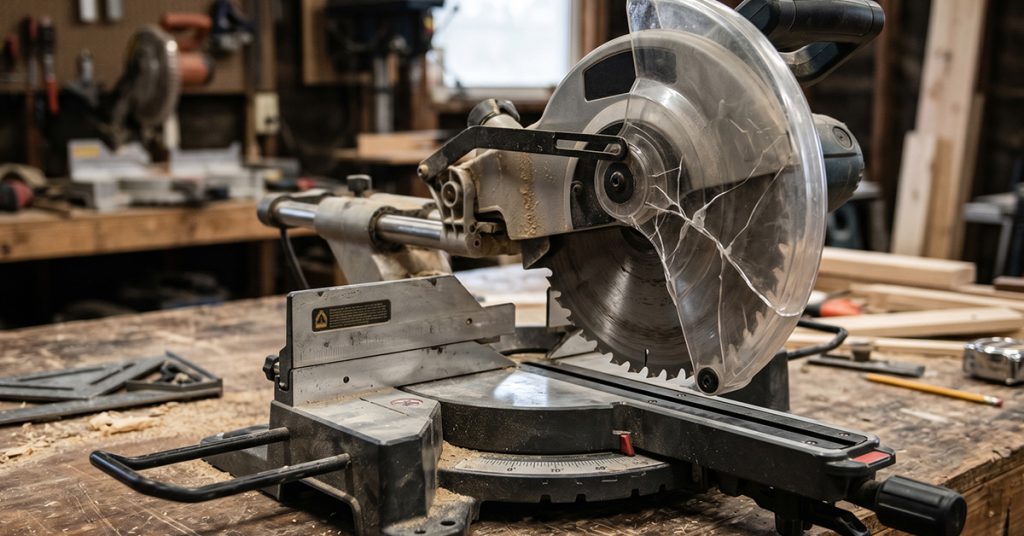
The core of the complaint centers on an event that occurred on April 20, 2024. While operating a 10-inch Chicago Electric miter saw, purchased brand new only 12 days prior, Plaintiff Terry Burick experienced a catastrophic failure of the tool’s primary safety feature.
According to the filing, the saw’s plastic blade guard contacted the rotating blade and “shattered in a sudden and unpredictable burst.” This left the high-speed blade exposed, which subsequently sliced into Mr. Burick’s left forearm. The resulting injuries were extensive, including the transection of multiple tendons, such as the extensor carpi ulnaris and brachioradialis, requiring multiple surgical interventions and aftercare.
The “Kaboom” Factor: A History of Notice
What elevates this case from a standard personal injury claim to a demand for punitive damages is the allegation that Harbor Freight had long-standing knowledge of this specific defect. The complaint cites a series of alarming customer reports submitted through the company’s own website over the last decade:
- 2015: A user reported that the “blade guard breaks for no reason at all.”
- 2019: A customer described a “KABOOM!” after a small piece of wood kicked up, causing the guard to shatter.
- 2020: Another report confirmed the plastic guard broke after hitting the blade.
The Plaintiff argues that these “repeated reports” placed the company on notice of a systemic and dangerous problem with the Model Number 61971 saw.
The Recall Disparity: 12-Inch vs. 10-Inch
Additional damaging evidence presented in the complaint is the 2023 recall. More than a year before Mr. Burick’s accident, Harbor Freight issued a recall for the blade guards on its 12-inch miter saws, explicitly stating the guards could break and pose an “injury hazard.”
The lawsuit contends that despite knowing the 10-inch models suffered from the same fatal flaw, the company “took no steps to correct the defect” and continued selling them to Pennsylvania consumers. The Plaintiff characterizes this choice as “reckless indifference” to consumer safety.
Navigating the Legal Theory: Strict Liability and Breach
The case is built upon three primary legal pillars:
- Count I: Negligence: Alleging the company failed to design, manufacture, or supply a saw free of defects and failed to perform an adequate risk assessment.
- Count II: Strict Liability: Invoking Section 402A of the Restatement (Second) of Torts, which holds that a supplier is liable if a product is sold in a “defective condition” that makes it “unsafe for use.”
- Count III: Breach of Warranties: Arguing the saw violated the 90-day express warranty of being “free from defects in materials and workmanship,” as the injury occurred just 12 days after purchase.
The Road Ahead in Allegheny County
As the litigation moves forward, the burden shifts to Harbor Freight to respond to these allegations of prior knowledge. The case serves as a somber case study in the intersection of corporate recall strategy and individual consumer safety. For Terry Burick, the goal is not just compensation for permanent scarring and loss of earning capacity, but a judicial finding that knowingly selling a defective tool is “unconscionable.”