Product Liability News & Legal Analysis
The latest product liability news, case analysis, and legal developments from The Trial Attorneys.
OpenAI Argues ChatGPT Information Is Not a Product Under Liability Law in FSU Shooting Cases 📎
Pennsylvania Superior Court Upholds $725 Million Benzene Verdict Against Exxon Mobil 📎
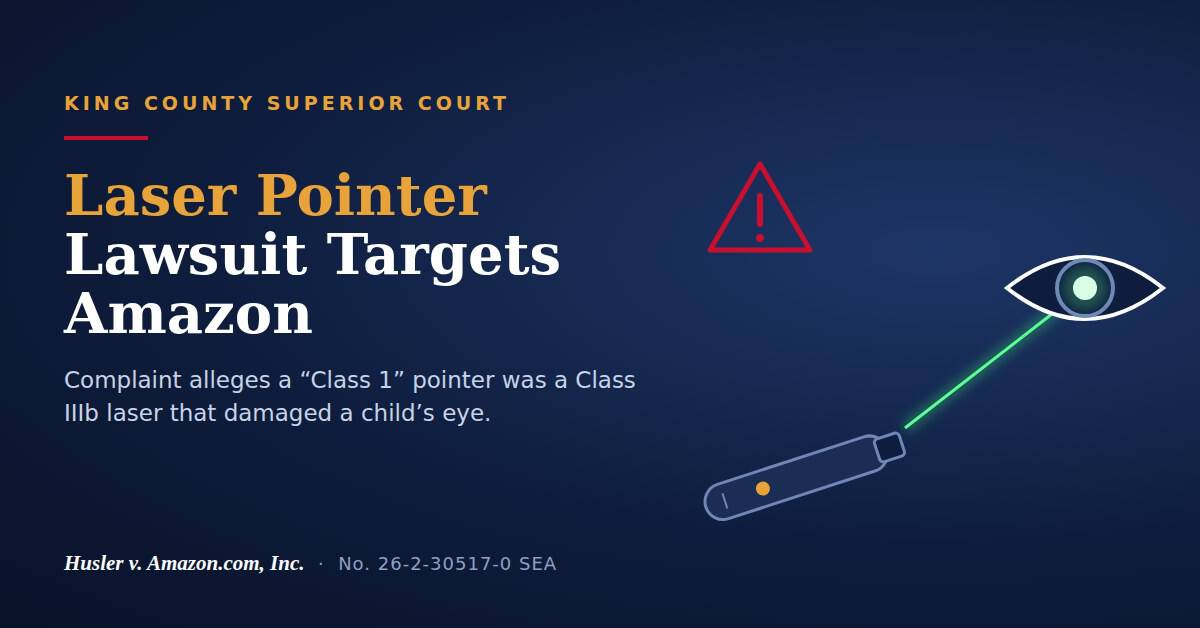
Idaho Family Sues Amazon, Alleging Mislabeled Laser Pointer Permanently Damaged 10-Year-Old’s Eye 📎
Eleventh Circuit Urged to Uphold $243 Million Tesla Autopilot Verdict 📎
Explain That to 12 Podcast
Listen to our latest legal news podcast
Your daily hub for the trial news and strategy that actually matters.
What Is Product Liability Law?
Product liability law holds manufacturers, distributors, and retailers legally responsible when a defective product causes injury or death. It is one of the few areas of civil law where strict liability often applies, meaning you may not need to prove negligence.
Three types of product defects are recognized under the law:
- Manufacturing defect: a specific product deviates from its intended design during production
- Design defect: the entire product line is inherently dangerous due to a flawed design
- Failure to warn: the product lacks adequate instructions or safety warnings
If you are injured by a defective product, you may have a claim against the manufacturer, the distributor, or the retailer. All three can be held liable in the chain of distribution.
Product liability cases frequently involve expert witnesses and significant discovery. They often result in large verdicts because courts expect manufacturers to prioritize consumer safety over profit.
Frequently Asked Questions
Can I sue if I was injured by a defective product?
Yes. If a defective product caused your injury, you may have a claim against the manufacturer, distributor, or retailer. You generally need to show that the product was defective, that the defect caused your injury, and that you were using the product as intended or in a reasonably foreseeable way.
What if the product had a warning label?
Warning labels do not automatically protect manufacturers from liability. If the warning was inadequate, buried in fine print, or failed to address the specific risk that caused your injury, the manufacturer may still be liable. Courts evaluate whether warnings were sufficient to alert a reasonable consumer.
Do I need to keep the defective product to file a claim?
Keeping the product as evidence is important. If it was destroyed or discarded, your case becomes harder but not impossible. Medical records, photographs, and witness testimony can sometimes substitute. Consult an attorney before discarding anything related to your injury.
What if many people were injured by the same product?
When a defective product injures many people, cases are often consolidated into a class action or multi-district litigation (MDL). Joining a class action may be appropriate in some cases, but individual lawsuits sometimes result in higher recoveries for seriously injured plaintiffs.
How long do I have to file a product liability claim?
Statutes of limitations vary by state, typically two to four years from the date of injury or the date you discovered the product caused your harm. Some states also have statutes of repose that cut off claims after a certain number of years regardless of when the injury occurred.
DAILY UPDATES
Get Legal Stories
That Matter
No filler. No fluff. Delivered daily.
Get Legal Stories
That Matter
No fillers. No fluff. Delivered daily.
By subscribing you agree to our Privacy Policy and Terms of Service. Unsubscribe anytime.
LET’S STAY CONNECTED
Injured by a Defective Product?
The Trial Attorneys connects you with qualified product liability attorneys who handle defective product cases on contingency. You pay nothing unless you win.