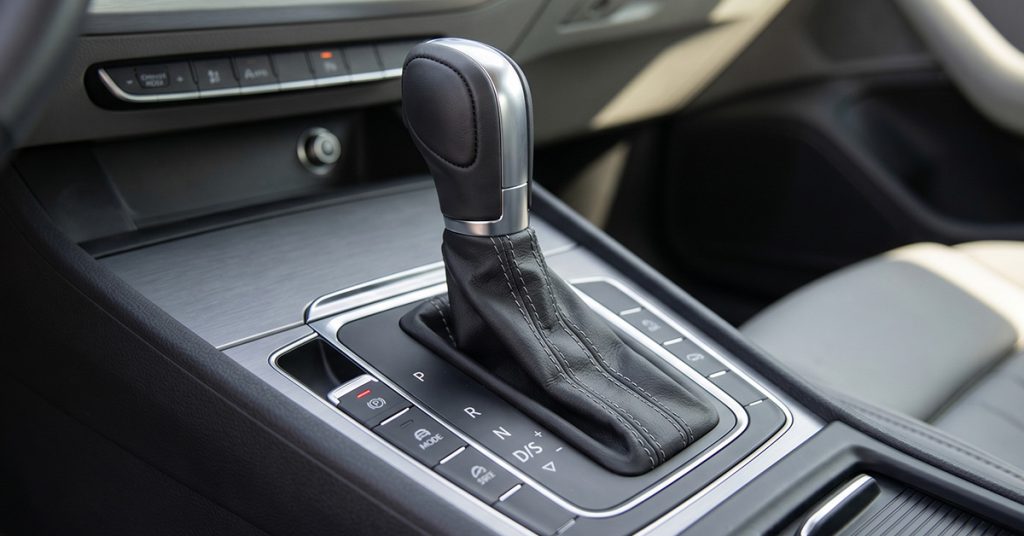
On March 4, 2022, Jeffrey Wu pulled his 2014 Jeep Grand Cherokee into a Kwik Trip in Lakeville, Minnesota. He did what millions of drivers do every day: he moved the shifter into what he believed was “park” and stepped out of the vehicle. In that moment, the predictable result failed him. The vehicle slipped out of position, rolled backward, and crushed his left leg, ultimately resulting in an amputation.
A gear shifter is a promise. It is the fundamental interface between a human and a multi-ton machine. When that promise is broken, the consequences are rarely measured in property damage; they are measured in lives changed forever.
What really happened in the case of Wu v. FCA US LLC was a collision between corporate finance and human-centered design. The documents from the litigation reveal that the 2014 Jeep was equipped with a “monostable” shifter, a device that snaps back to a central position regardless of which gear is selected. This creates what the litigation described as an “illusory park”. The driver feels like they’ve achieved the goal, but the machine has other ideas.
After enough incidents, the “operator error” explanation stops making sense.
The evidence shows that FCA (now Stellantis) knew this shifter was problematic years before it ever hit the road. In 2010, internal testing revealed that this specific monostable design performed “dead last” in customer usability clinics. In fact, 27 out of 30 test participants reported they couldn’t even feel the gears. While other designs required a single attempt to operate correctly, this one required an average of five.
The question for a jury then becomes: why was it selected for use?
The answer, as is often the case, was written in ink. FCA’s own internal documents show they considered a superior “rotary” shifter design, the kind found in Jaguars, but opted against it to avoid a $15 million royalty fee and a $9.76 per-unit cost. Instead, they chose the design their own human factor’s department (HMI) “did not recommend” because it was too difficult to use.
Safety shouldn’t be a minor consideration; it’s an engineering priority. By 2012, FCA’s own tech lead for shifter systems sent an internal email stating that the results for the monostable shifter were “much worse than I expected” and urged the company to get it out of their cars “ASAP”. They didn’t.
In April 2026, a Dakota County jury reached a verdict that reflected the reality and consequences of this failure. They found the Jeep’s design to be in a defective condition and unreasonably dangerous. They also found the warnings provided by the company to be inadequate.
However, the jury also acknowledged reality of the driver’s responsibility and error. They attributed 70% of the fault to FCA, but placed 30% on Mr. Wu for his own negligence in the moment. They also declined to award punitive damages, finding that while the design was defective, the company’s conduct did not meet the high legal bar of “deliberate disregard” for safety required under Minnesota law.
The resulting award of over $18.4 million, including $12 million for Mr. Wu’s past and future pain and emotional distress, and $2.5 million for his wife, Ting Yang, is a staggering figure. But it is a calculation based on the weight of a lifetime of disability, medical bills, lost earnings, and loss of companionship.
Juries tend to acknowledge when a company’s design fails to account for consumer intuitiveness and usability when designing, implementing and manufacturing a product critical to automobile safety. Responsibility sits with the entity that chose to save $15 million on a shifter while knowing its own experts called the choice a “shame”.
If you are trying to understand why a product’s design resulted in life-altering tragedy, you often only need to look at the distance between the boardroom’s balance sheet and the driver’s hand. If you’re asking whether injuries could have been prevented, those are the questions worth reflecting on.