Aviation safety is often discussed as a series of complex calculations, but for a trial lawyer, it usually comes down to a single decision. The industry relies on the idea that when a part is known to fail, the person in charge of the machine will fix it.
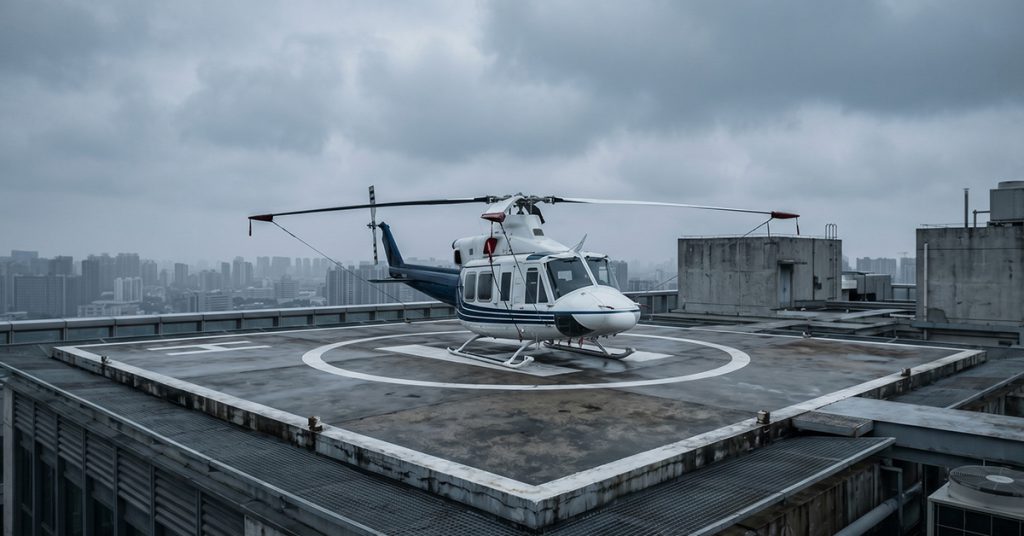
The complaint recently filed against New York Helicopter Charter Inc and its CEO Michael Roth, as well as New York Helicopter Tours, LLC, suggests that this fundamental understanding was ignored. On April 10, 2025, a family of five, parents and three children, died when their helicopter broke apart over the Hudson River. The technical cause cited in the document is a failure of the tailboom following a delamination of the main rotor blades.
In aviation, delamination isn’t a mystery. It is the gradual separation of the layers that make up a rotor blade. The FAA issued Airworthiness Directive 2021-01081-R specifically to address this. It required regular, documented inspections to ensure these blades remained structural. According to the complaint, those inspections didn’t happen.
Aviation maintenance is not a matter of “if” a part will wear out, but “when.” An Airworthiness Directive is the FAA’s way of saying a part is known to be dangerous if left unmonitored. When a carrier ignores a directive, they aren’t just missing a maintenance window. They are making a choice to operate an aircraft in a way that the regulator has deemed unsafe.
Juries often look for the moment a mistake starts speaking volumes about corporate priorities. The document points to a specific interaction following the crash: when the FAA asked the company to voluntarily pause operations, the Director of Operations agreed. Minutes later, CEO Michael Roth allegedly overruled him and fired him for cooperating.
This detail is telling. It suggests a corporate environment where safety protocols were viewed as obstacles to be managed rather than requirements to be followed. When a corporate officer is punished for prioritizing safety, it becomes understandable that mechanical failures aren’t accidents, but preventable, foreseeable outcomes.
Maintenance logs are the only way to confirm that an aircraft is fit for flight. Passengers don’t inspect rotor blades; they trust the operator to do it. When that trust is broken to save time or money, the consequences are rarely minor.
The legal system doesn’t exist to change the physics of a helicopter crash. It exists to determine where the liability lies when the rules of maintenance are treated as optional. If you’re trying to understand why a machine failed, the answer is often found in the records the company chose not to keep and the warnings or repairs they chose to ignore.