On April 15, 2026, the Supreme Court of Wisconsin delivered a landmark decision in the case of Estate of Carol Lorbiecki v. Pabst Brewing Company. This ruling not only affirms a nearly $7 million judgment for the family of a worker who died of mesothelioma but also reinforces a powerful legal weapon for plaintiffs: the Wisconsin Safe-Place Statute.
For personal injury attorneys, this case is a blueprint for navigating complex liability in toxic torts and understanding the precision required to maximize recovery under statutory damage caps.
The Legal Leverage: Wisconsin’s Safe-Place Statute
The heart of this case was the “Safe-Place” statute (Wis. Stat. § 101.11), which imposes a heightened, non-delegable duty of care on property owners. Unlike common-law negligence, which often allows owners to shift blame to independent contractors, the Safe-Place duty remains with the owner.
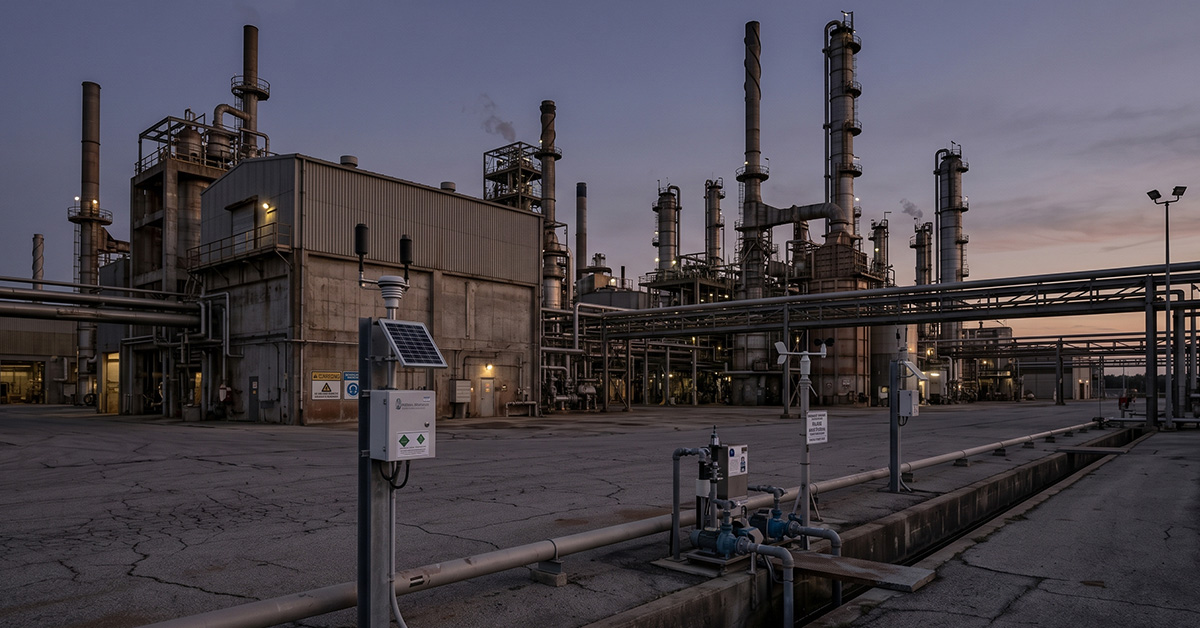
The Plaintiffs successfully argued that Pabst knew its brewery contained “miles” of asbestos-insulated pipe and that maintenance work—specifically chipping and sawing by steamfitters—would inevitably turn that asbestos into a deadly airborne dust. By requiring contractors to provide notice before any “welds or cuts,” Pabst retained just enough control over the work environment to trigger the heightened duty to keep the premises safe for “frequenters” like Gerald Lorbiecki.
The Math of the Award: Imputation and Statutory Caps
This verdict provides a fascinating case study in how “recovered” damages are calculated in Wisconsin. The jury’s initial findings underwent significant legal sculpting:
The jury originally calculated $6,545,163.55 in compensatory and punitive damages. The court applied a statutory cap on loss-of-society and companionship damages, which reduced the total compensatory award to $5,545,163.55.
Apportionment and Imputation: While the jury only found Pabst 22% liable, the Plaintiff’s counsel successfully moved to impute an additional 20% of fault from a non-party contractor (Sprinkmann) to Pabst. Because Pabst’s duty was non-delegable, it was forced to pay for the contractor’s share of the blame, bringing its total responsibility to 42% of the $5.5M total, or $2,328,968.69.
Punitive Damages: The jury awarded $20 million in punitive damages after finding Pabst acted with “intentional disregard” for safety.
The Punitive Cap: Under Wisconsin law (Wis. Stat. § 895.043(6)), punitive damages are capped at two times the recovered compensatory damages. Thus, the $20 million award was slashed to $4,657,937.38 (2 x $2.3M).
The final judgment totaled $6,986,906.07.
What an Effective Attorney Does: Strategy in Action
This victory was not just about the tragedy of the illness; it was about evidentiary precision and strategic litigation:
An effective attorney looks for the small details that trigger liability. Here, the evidence that Pabst required notification before “welds or cuts” was the linchpin that proved the company retained control over the hazardous work area.
To secure the punitive award, the attorneys surfaced internal Pabst memos from 1971, years before Lorbiecki worked there, demonstrating that the company was already aware that airborne asbestos caused asbestosis. This proved Pabst didn’t just fail to notice a danger; it “deliberately failed” to act despite knowing the risks.
The defense attempted to argue that the punitive cap should be even lower, but the Plaintiff’s counsel successfully argued that “recovered” damages include amounts imputed through non-delegable duties, not just the original percentage found by the jury.
Final Takeaway
The Lorbiecki decision is a stern warning to Wisconsin property owners that “undisturbed” asbestos is not a shield against liability when they know repair work will disturb it. For victims, it is a reminder that an effective attorney doesn’t just calculate a loss, they architect a recovery by holding the top of the corporate chain responsible for the hazards they leave behind.