
Criminal Law News & Legal Analysis
The latest criminal law news, case analysis, and legal developments from The Trial Attorneys.
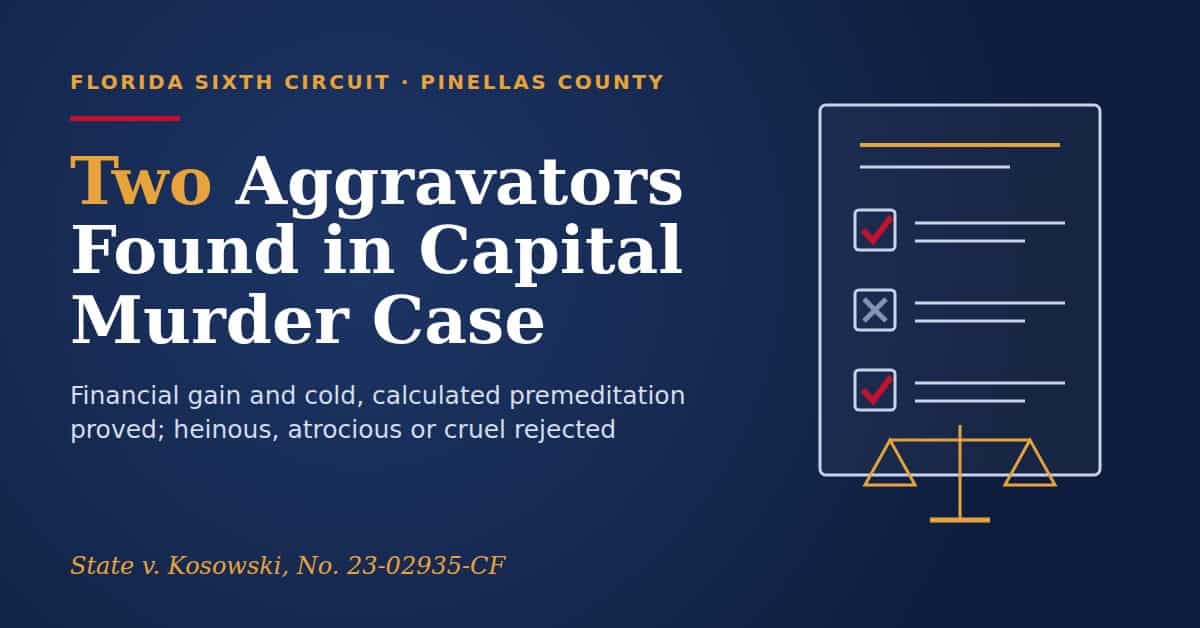
Pinellas Judge Finds Two Aggravators in Kosowski Capital Murder Case 📎
More Articles Coming Soon
More Articles Coming Soon
Explain That to 12 Podcast
Listen to our latest legal news podcast
Your daily hub for the trial news and strategy that actually matters.
What Is Criminal Law?

Criminal law governs conduct the government has prohibited by statute because it is harmful to society. Unlike civil law, criminal cases are prosecuted by the government against an individual. The stakes are serious: convictions can result in fines, probation, loss of professional licenses, and incarceration.
Your constitutional rights in a criminal case include:
- The right to remain silent
- The right to an attorney
- The right to a jury trial
- Protection against unreasonable searches and seizures
- The presumption of innocence until proven guilty
Criminal cases fall into two categories. Misdemeanors are less serious offenses typically punishable by up to one year in jail. Felonies are more serious offenses that can result in multi-year prison sentences and significant collateral consequences.
If you are facing criminal charges, consulting an attorney immediately is critical. What you say to law enforcement before speaking with counsel can affect the outcome of your case.
Frequently Asked Questions
What should I do if I am arrested?
Exercise your right to remain silent immediately. Politely tell law enforcement that you wish to remain silent and that you want an attorney. Do not answer questions, explain yourself, or try to talk your way out of the situation. Anything you say can and will be used against you. Wait for your attorney before speaking to anyone.
What is the difference between a misdemeanor and a felony?
Misdemeanors are less serious crimes typically punishable by up to one year in county jail, fines, or probation. Felonies are more serious offenses that carry potential state or federal prison sentences of more than one year. Felony convictions also carry significant collateral consequences including loss of voting rights, firearms rights, and professional licenses.
Do I need a lawyer if I am innocent?
Absolutely yes. The criminal justice system is complex, and innocence alone does not guarantee a favorable outcome. An experienced criminal defense attorney knows how to challenge evidence, protect your constitutional rights, negotiate with prosecutors, and present your case effectively.
What is a plea deal and should I take one?
A plea deal is an agreement between the defendant and the prosecution where the defendant pleads guilty, typically to a lesser charge or for a reduced sentence, in exchange for avoiding trial. Whether to accept a plea deal depends entirely on the specific facts of your case, the strength of the evidence against you, and the potential consequences of conviction at trial.
What happens if I cannot afford an attorney?
The Sixth Amendment guarantees the right to counsel in criminal proceedings. If you cannot afford an attorney, the court will appoint a public defender to represent you at no cost. Public defenders are licensed attorneys, though they often carry heavy caseloads. If you can afford private counsel, doing so is generally advisable for serious charges.
DAILY UPDATES
Get Legal Stories
That Matter
No filler. No fluff. Delivered daily.
Get Legal Stories
That Matter
No fillers. No fluff. Delivered daily.
By subscribing you agree to our Privacy Policy and Terms of Service. Unsubscribe anytime.
LET’S STAY CONNECTED

Facing Criminal Charges?
Your rights matter from the moment of arrest. The Trial Attorneys can connect you with qualified criminal defense attorneys in your area who will fight to protect them.